
19-Year-Old Claims Her Dad's the DA While Four Officers Take Her to the Ground
POLICE BODYCAM FOOTAGE: UNDERSTANDING TRAFFIC STOPS, POLICE PURSUITS, ARRESTS, AND HIGH-RISK ENCOUNTERS
Every day, police officers across the United States respond to situations that can change without warning. A routine traffic stop can become a dangerous confrontation. A suspicious vehicle can suddenly accelerate away and trigger a pursuit. A simple conversation can end with an arrest, while an apparently threatening situation can sometimes be resolved peacefully through communication.
Modern police footage has given the public a much closer look at these moments. BODY-WORN CAMERAS, DASH CAMERAS, SECURITY CAMERAS, AND BYSTANDER VIDEOS can document encounters from multiple perspectives, preserving details that might otherwise depend entirely on memory or conflicting accounts.
These recordings have also become an important part of public conversations about policing, officer safety, accountability, use of force, and the unpredictable nature of law-enforcement work.
POLICE BODYCAM — SEEING AN ENCOUNTER FROM THE OFFICER'S PERSPECTIVE
POLICE BODYCAM FOOTAGE HAS CHANGED THE WAY THE PUBLIC CAN VIEW LAW-ENFORCEMENT ENCOUNTERS.
A body-worn camera travels with the officer, often recording conversations, commands, movements, and rapidly changing conditions from close range. Instead of seeing only the final seconds of an incident, viewers may be able to observe how the encounter began and what happened before a critical decision was made.
That context can be extremely important.
Bodycam recordings may show an officer approaching a vehicle, speaking with a driver, responding to a domestic disturbance, searching for a suspect, investigating suspicious behavior, or attempting to calm someone experiencing a crisis.
The footage can also demonstrate how quickly circumstances change.
An individual who appears cooperative during the first minute of an encounter may suddenly run. Someone may refuse repeated commands. An officer may discover a weapon that was previously hidden. At other times, a situation that initially appears dangerous may end peacefully after several minutes of communication.
BODYCAM VIDEO DOES NOT AUTOMATICALLY TELL THE ENTIRE STORY, because camera position, lighting, movement, audio quality, and what happens outside the camera's field of view can affect what viewers see. But it can provide a significant piece of evidence when investigators reconstruct an incident.
Recent cases also illustrate why complete context matters. Police departments sometimes release multiple body-camera perspectives after cellphone footage of an arrest circulates online, allowing investigators and the public to compare different portions of the encounter.
For viewers, this is one reason full-length police footage can be more informative than a short viral clip.
TRAFFIC STOPS — ROUTINE MOMENTS THAT CAN CHANGE IN SECONDS
Millions of interactions between motorists and law enforcement begin in one of the most ordinary ways possible: FLASHING RED AND BLUE LIGHTS APPEAR IN THE REARVIEW MIRROR.
Traffic stops may begin because of speeding, unsafe driving, an equipment violation, an expired registration, or another suspected traffic offense.
Many are brief and uneventful. The officer approaches, explains the reason for the stop, checks the necessary documents, and eventually issues a warning or citation.
However, officers generally approach vehicles without knowing exactly who is inside or what circumstances they may encounter.
That uncertainty is one reason traffic-stop bodycam videos can feel tense even before anything dramatic happens.
An officer may notice behavior that leads to additional questions. A driver or passenger might refuse to cooperate. Police may discover an outstanding warrant or suspected contraband. In rare cases, an occupant may attempt to flee or produce a weapon.
A 2026 Memphis case demonstrated the extreme end of that risk: authorities released bodycam footage from a traffic stop in which an officer was shot after a suspect allegedly produced a second concealed handgun.
Of course, dramatic incidents should not be treated as representative of every traffic stop. MOST POLICE CONTACTS DO NOT BECOME VIRAL VIDEOS.
That distinction matters when watching law-enforcement footage online. Social platforms naturally amplify unusual, confrontational, or shocking encounters because those videos attract attention.
The quiet traffic stop that ends with a warning rarely receives millions of views.
POLICE PURSUITS — WHEN A TRAFFIC STOP BECOMES A CHASE


Few forms of police footage create immediate tension like a vehicle pursuit.
The moment a driver refuses to stop and accelerates away, officers face a new set of decisions. A PURSUIT IS NOT ONLY ABOUT CATCHING A FLEEING DRIVER — IT IS ALSO ABOUT MANAGING RISK.
Speed, traffic volume, pedestrians, weather, road conditions, visibility, and the suspected offense can all influence what happens next.
Dashcam and bodycam footage can capture patrol vehicles following suspects through city streets, highways, residential neighborhoods, and rural roads. Police radio traffic may reveal officers communicating locations and requesting assistance while dispatchers coordinate additional units.
For the public, these videos can be gripping. But behind the dramatic footage is a serious safety problem.
A fleeing vehicle can endanger uninvolved motorists and pedestrians. Officers must therefore continuously assess changing circumstances rather than simply pursue at any cost.
Some chases end when the suspect voluntarily stops. Others conclude when a vehicle becomes disabled, crashes, or reaches an area where officers can safely intervene. In certain circumstances, agencies may decide that continuing a chase presents too much danger.
Once the vehicle stops, the incident enters another critical stage.
Officers may use what viewers recognize as a HIGH-RISK OR FELONY-STYLE STOP, giving commands from behind cover and directing occupants out of the vehicle one at a time.
Even though the chase has ended, uncertainty remains. Police may not know whether the occupants are armed, whether someone intends to run, or whether there are additional passengers hidden inside.
That is why the final moments of a pursuit can sometimes be as tense as the chase itself.
ARRESTS — WHAT HAPPENS WHEN POLICE TAKE SOMEONE INTO CUSTODY


An arrest represents a major transition during a police encounter: AN INDIVIDUAL IS BEING TAKEN INTO CUSTODY AND IS NO LONGER FREE TO LEAVE.
Bodycam recordings can document the events surrounding that process, from the initial explanation and commands to handcuffing, searches, transportation, and the recovery of evidence.
Some arrests are calm.
A suspect follows instructions, places their hands behind their back, and is secured without a physical struggle.
Other arrests become far more complicated.
A person may attempt to run, pull away, resist being handcuffed, or refuse repeated commands. Multiple officers may become involved, particularly when they believe the individual presents an immediate safety risk.
These situations frequently generate strong reactions when videos appear online.
A short clip showing only the physical portion of an arrest may leave viewers with unanswered questions about what happened immediately beforehand. Conversely, the existence of earlier resistance does not automatically answer whether every later police action was appropriate.
THE COMPLETE SEQUENCE OF EVENTS MATTERS.
Bodycam footage can therefore be important both for documenting suspected criminal conduct and for reviewing the conduct of the officers themselves.
Supervisors, investigators, attorneys, courts, journalists, and members of the public may examine the same recording for very different reasons.
That is one of the most significant effects of widespread body-camera use: the camera can become an independent record that may support, challenge, or add context to competing descriptions of an encounter.
POLICE ENCOUNTERS — EVERY CALL IS DIFFERENT
Not every police encounter begins with a traffic violation or ends in an arrest.
Officers respond to an enormous variety of circumstances: suspicious-person reports, disturbances, welfare checks, arguments, accidents, property crimes, noise complaints, trespassing calls, missing persons, and many other situations.
THE UNPREDICTABILITY OF THESE ENCOUNTERS IS ONE OF THE DEFINING FEATURES OF POLICE WORK.
Communication can be crucial.
Officers frequently need to gather information from several people who may provide conflicting accounts. Witnesses can be frightened or confused. Someone involved may be angry, intoxicated, injured, or unwilling to communicate.
In some encounters, patience and verbal communication resolve the situation.
In others, circumstances can escalate despite attempts to gain cooperation.
The availability of bodycam footage allows viewers to hear many of those conversations directly rather than relying exclusively on a later summary.
Technology is changing those interactions as well. For example, recent reporting described an officer using a translation capability built into a body camera to communicate with a Mandarin-speaking driver during a traffic stop.
This illustrates a less dramatic but equally interesting side of modern policing: body cameras are evolving from passive recording devices into tools that can potentially assist officers during encounters.
WHY COMPLETE POLICE FOOTAGE MATTERS
Police videos are among the most compelling forms of real-world footage because viewers know that the people involved often do not know what will happen next.
But A 20-SECOND VIRAL CLIP AND A 20-MINUTE BODYCAM RECORDING CAN CREATE VERY DIFFERENT IMPRESSIONS OF THE SAME INCIDENT.
Before drawing conclusions, it can be important to consider what occurred before and after the most dramatic moment, whether additional camera angles exist, what officers knew at that point, and what later investigations established.
There is another growing issue: not everything labeled “bodycam footage” online is authentic. Fact-checkers have documented viral police-style videos that were actually scripted reenactments rather than genuine law-enforcement recordings.
For publishers and viewers alike, verifying the original source is increasingly important.
REAL POLICE BODYCAM FOOTAGE CAN PROVIDE CONTEXT, BUT CONTEXT STILL REQUIRES CAREFUL INTERPRETATION.
From routine traffic stops to high-speed pursuits, arrests, and unexpected street encounters, these recordings reveal how quickly circumstances can evolve. They can document courageous actions, mistakes, confusion, cooperation, resistance, de-escalation, and moments when decisions must be made almost instantly.
For anyone interested in POLICE BODYCAM, TRAFFIC STOPS, POLICE PURSUITS, ARRESTS, AND POLICE ENCOUNTERS, the most valuable footage is often not simply the most dramatic clip.
It is the footage that allows viewers to understand WHAT HAPPENED BEFORE, DURING, AND AFTER THE MOMENT THAT CAPTURED EVERYONE'S ATTENTION.
Comments (0)
Loading comments...
May You Like
How To Demolish A Clean Record In Seconds
FWPD releases body, dash cam footage of recent controversial arrest
Officer Allegedly PUNCHES Woman In Custody
Latest Posts


Popular Posts
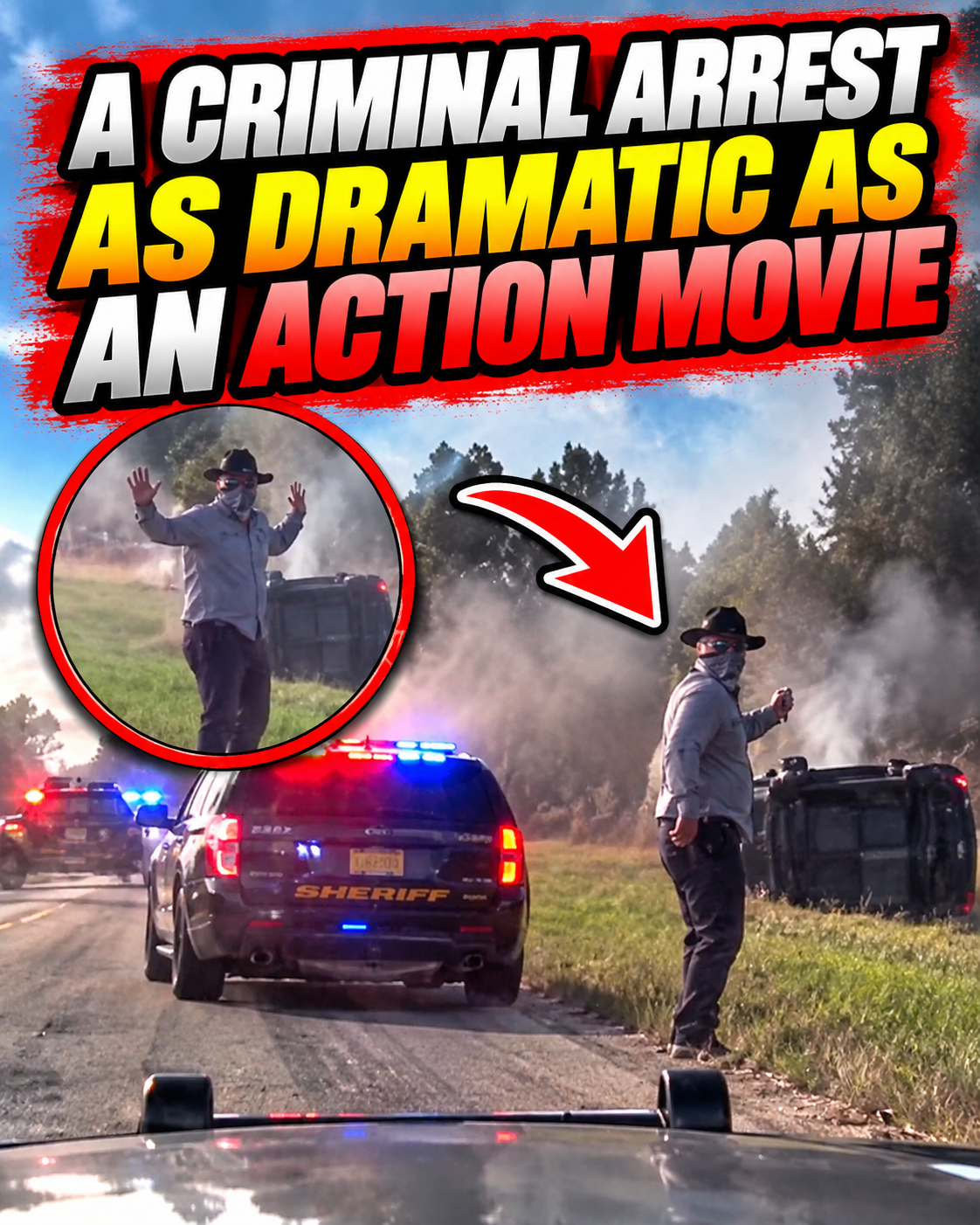
A Criminal Arrest as Dramatic as an Action Movie
Sep 26, 2026