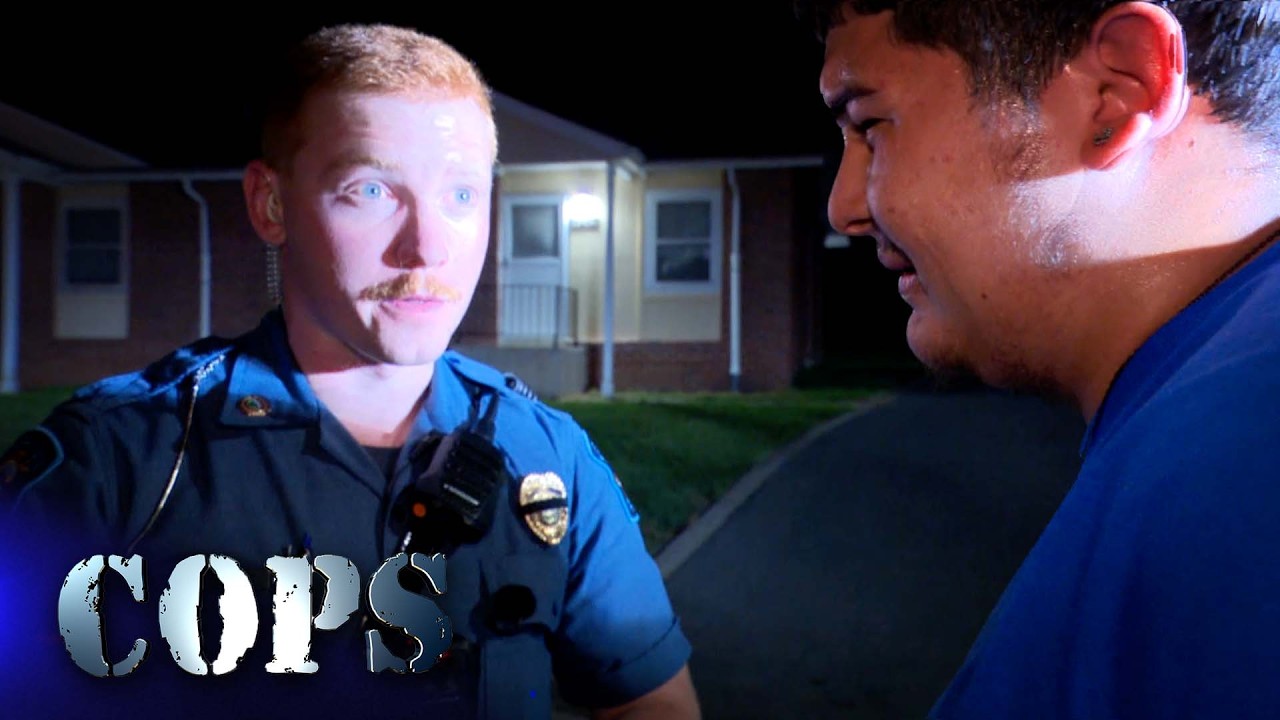
Officer Walks Through Contradictions That Undo the Official Story
A police officer's recorded walkthrough of a case's timeline highlights contradictions that undermine the account the public was originally given. The clip, titled "Dismantling the Lie," centers on the officer's effort to reconcile what was said with what the record shows, and it has renewed questions about how the official version took hold.

The Contradictions at the Center
A police officer's detailed walkthrough of a case has drawn attention for the way it isolates contradictions in the account the public was originally offered. Rather than announcing conclusions, the officer works through the record point by point, letting the inconsistencies surface on their own.
The presentation is built on comparisons: what was said at one moment against what was documented at another. The cumulative effect matters more than any single discrepancy, because each contradiction narrows the space for the original story to remain intact.
The clip's title, "Dismantling the Lie," frames the exercise as an unmaking rather than an accusation. The officer's approach is procedural, which is what gives the contradictions their weight.
Why Contradictions Carry Evidentiary Force
Contradictions in an official account are not automatically proof of wrongdoing. They can come from faulty memory, poor record-keeping, or genuine error. But when a pattern of them accumulates around the same narrative, investigators and courts treat that pattern as significant.
Timelines are the usual pressure point. A statement about when something happened, made under the assumption that it was true, becomes difficult to sustain once the underlying records are laid alongside it.
The officer's walkthrough appears to follow that logic, treating each inconsistency as a test of the account rather than as an isolated mistake.
What the Officer Is Asking the Audience to Confront
The central question the clip puts to viewers is not whether people lied, but why the original version was accepted for as long as it was. That question implicates the institutions that repeated it, the audiences that received it, and the incentives that kept it in circulation.
The officer's position, as presented, is that exposing contradictions is a form of accountability in itself. It does not require proving intent; it requires showing that the account and the evidence no longer align.
That distinction matters for how the case is discussed publicly. A contradiction is a factual observation, not a verdict, and treating it as such keeps the focus on the record.
The Broader Problem of Repeating an Unverified Story
Cases like this one tend to reveal how quickly a narrative can harden once it has been repeated by credible-sounding sources. Each retelling borrows authority from the last, and the underlying verification can become secondary.
For the public, the practical lesson is to separate what has been established from what has merely been stated. The methods on display in the officer's walkthrough are the same ones a careful reader would use: comparing sources, checking sequences, and flagging what does not match.
Whether the contradictions ultimately change the outcome of the case remains an open question. What the walkthrough does is make the inconsistencies harder to ignore.
What Comes Next
The contradictions raised in the clip will likely shape how the case is debated from here, particularly among those who followed the original account closely. Once a specific inconsistency is documented, it tends to reappear in later coverage and in any formal review.
The officer's presentation does not resolve the case. It reframes it, shifting attention from the conclusion to the reasoning that produced it.
For viewers, the value of the exercise may lie less in a single revelation than in the method: a disciplined refusal to accept a story simply because it was repeated often enough to sound settled.
Comments (0)
Loading comments...
May You Like
Routine Traffic Stop Forces Driver to Run as Officers Close In

The Go Signal: How a Sting Operation Actually Unfolds on the Ground

Police Taser Suspect Mid-Sprint as Foot Chase Ends in Seconds